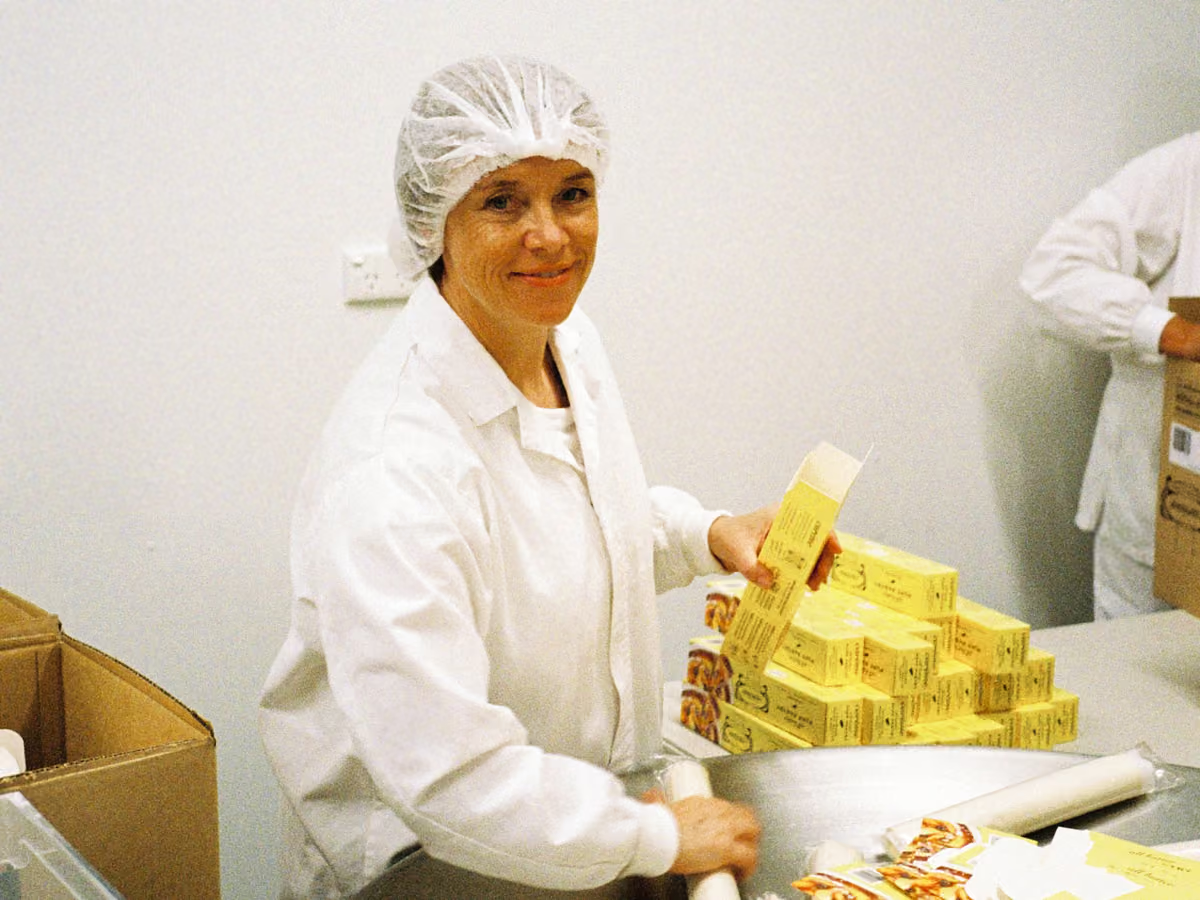
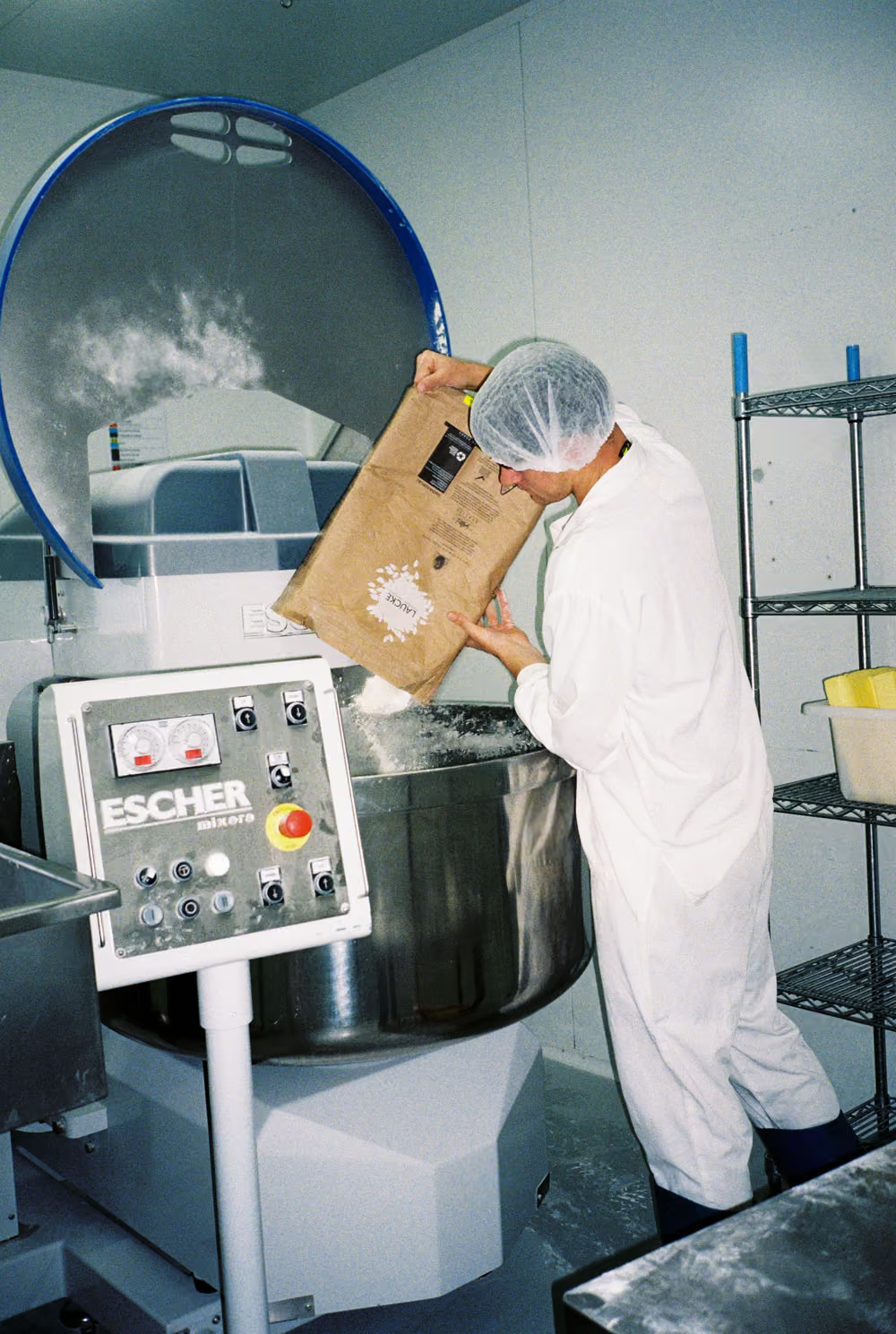
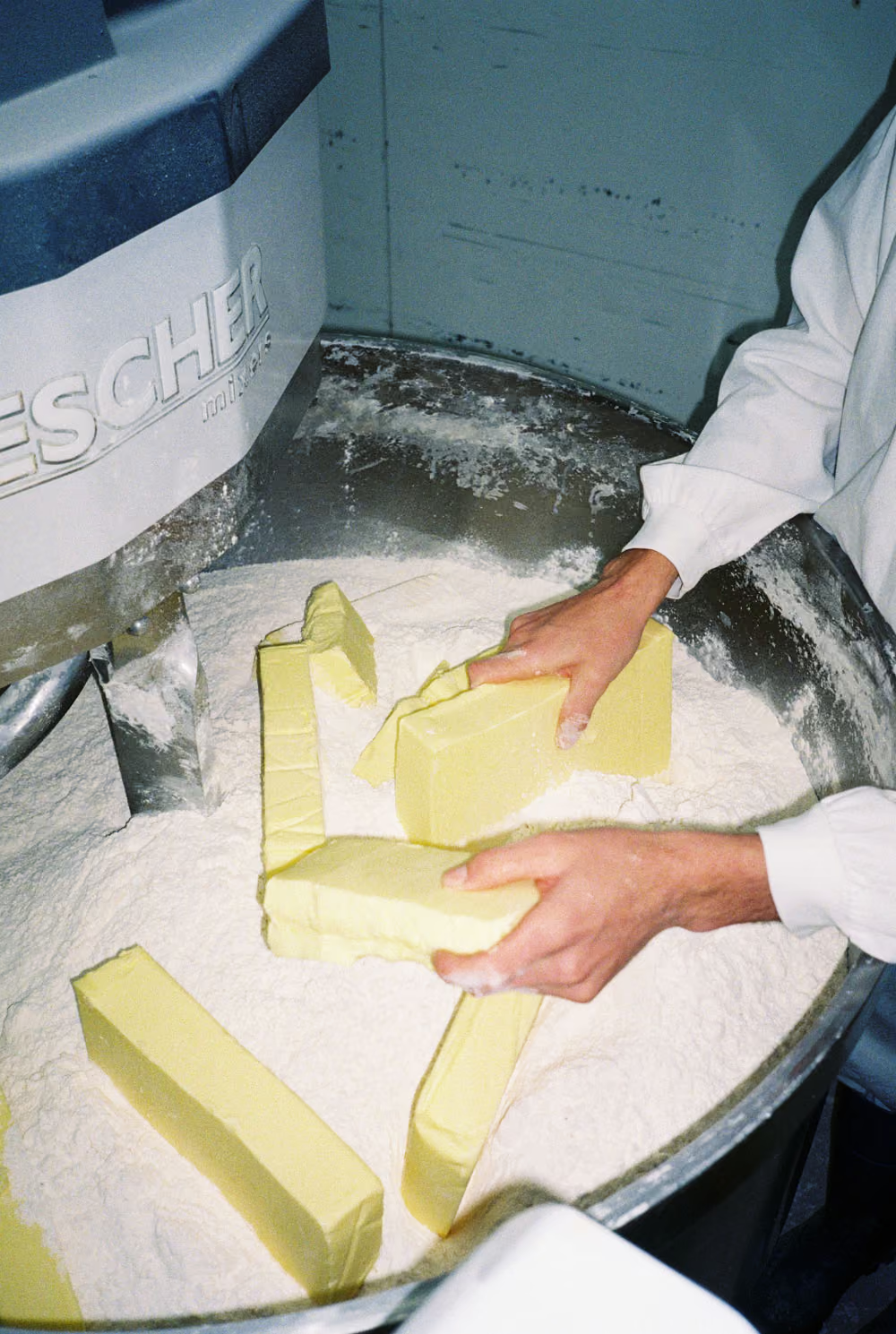
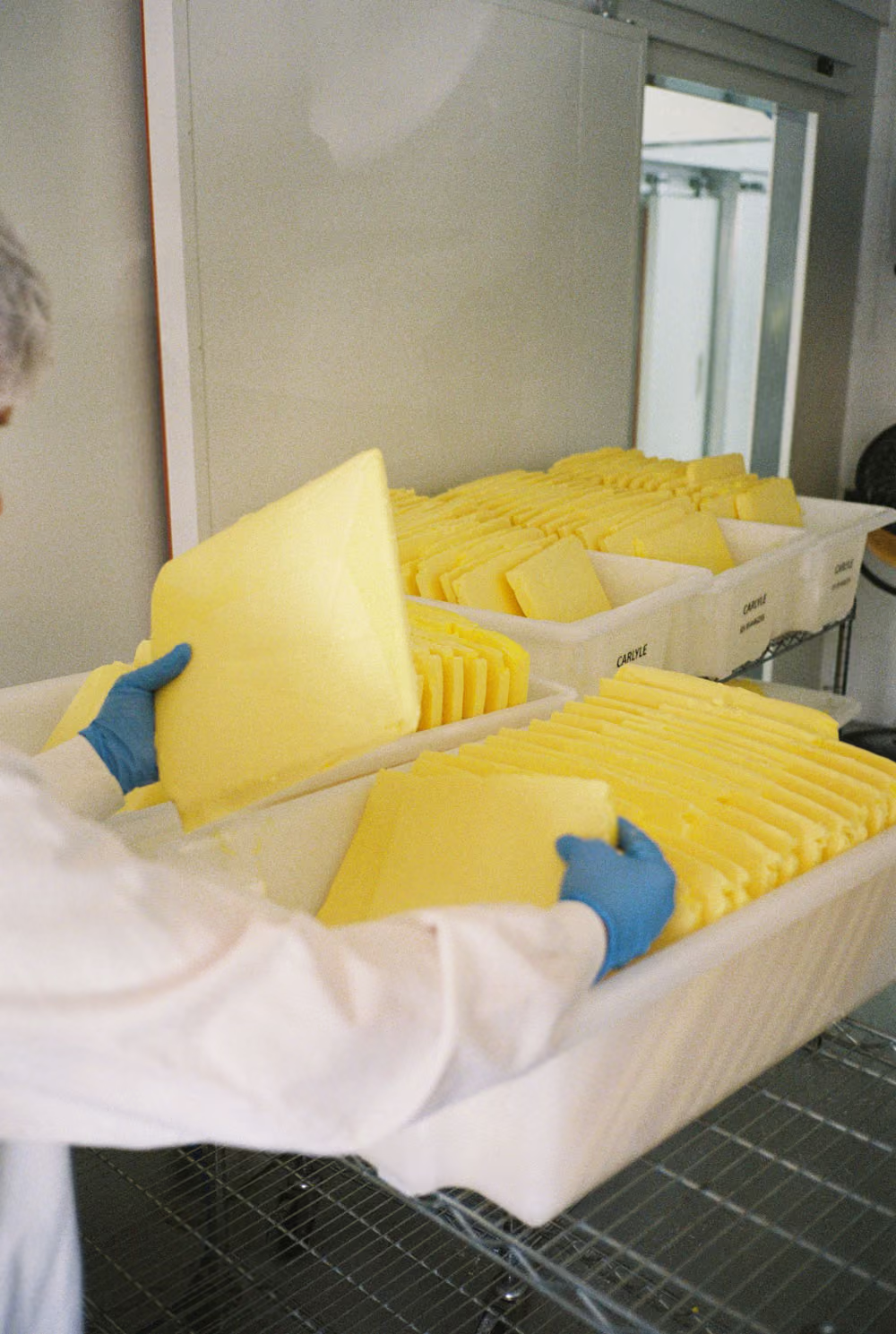
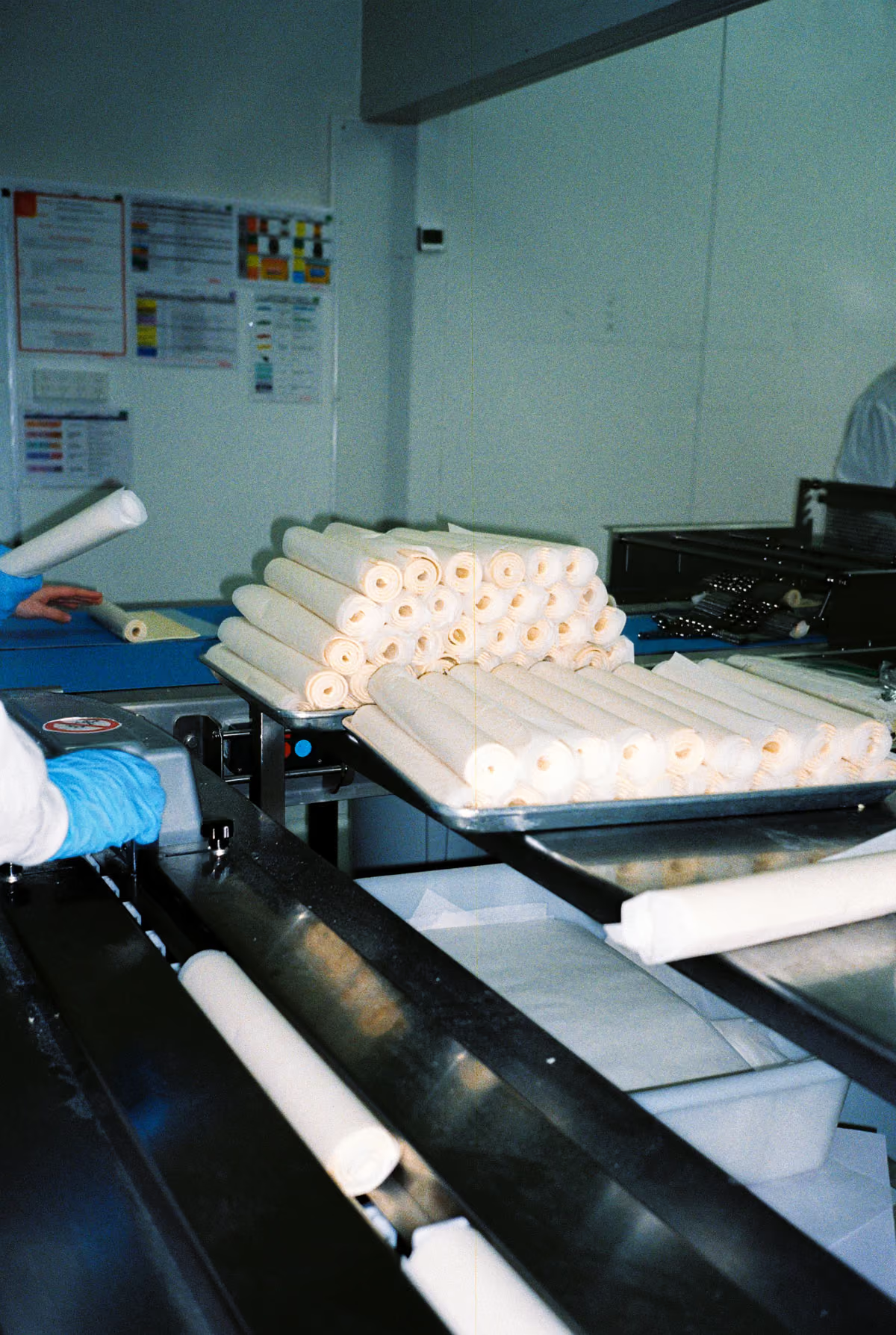
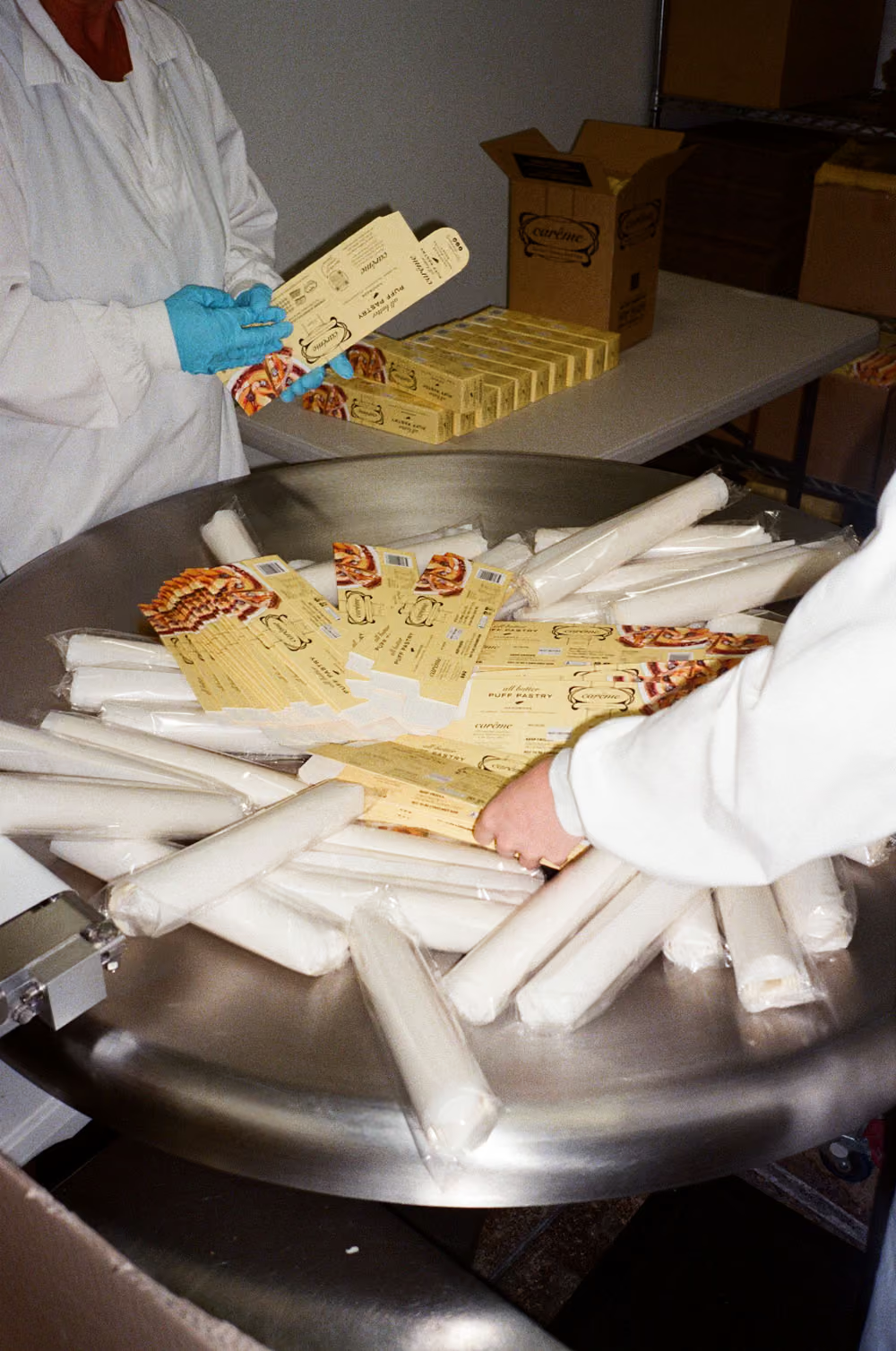
This is how we make our pastry.
Pastry is all we make, and all we’ve made for twenty years. In that time, we’ve learned that the best butter pastry comes down to a few simple things, done properly. Here’s what goes into a roll of Carême, and why you’ll taste the difference the moment it comes out of the oven.
How we make Australia’s best butter pastry
The butter
The folding
The ingredients
Made in the Barossa
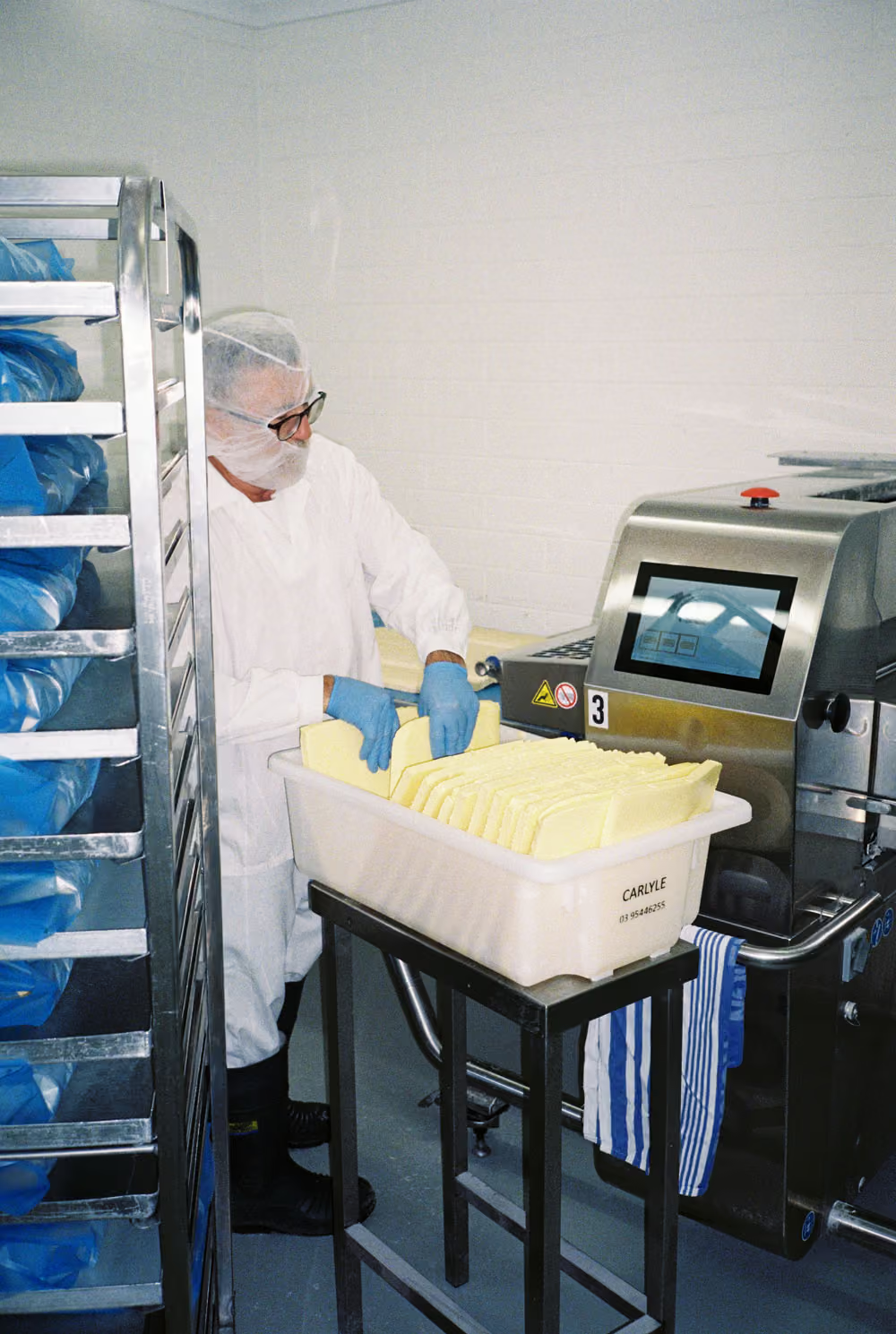
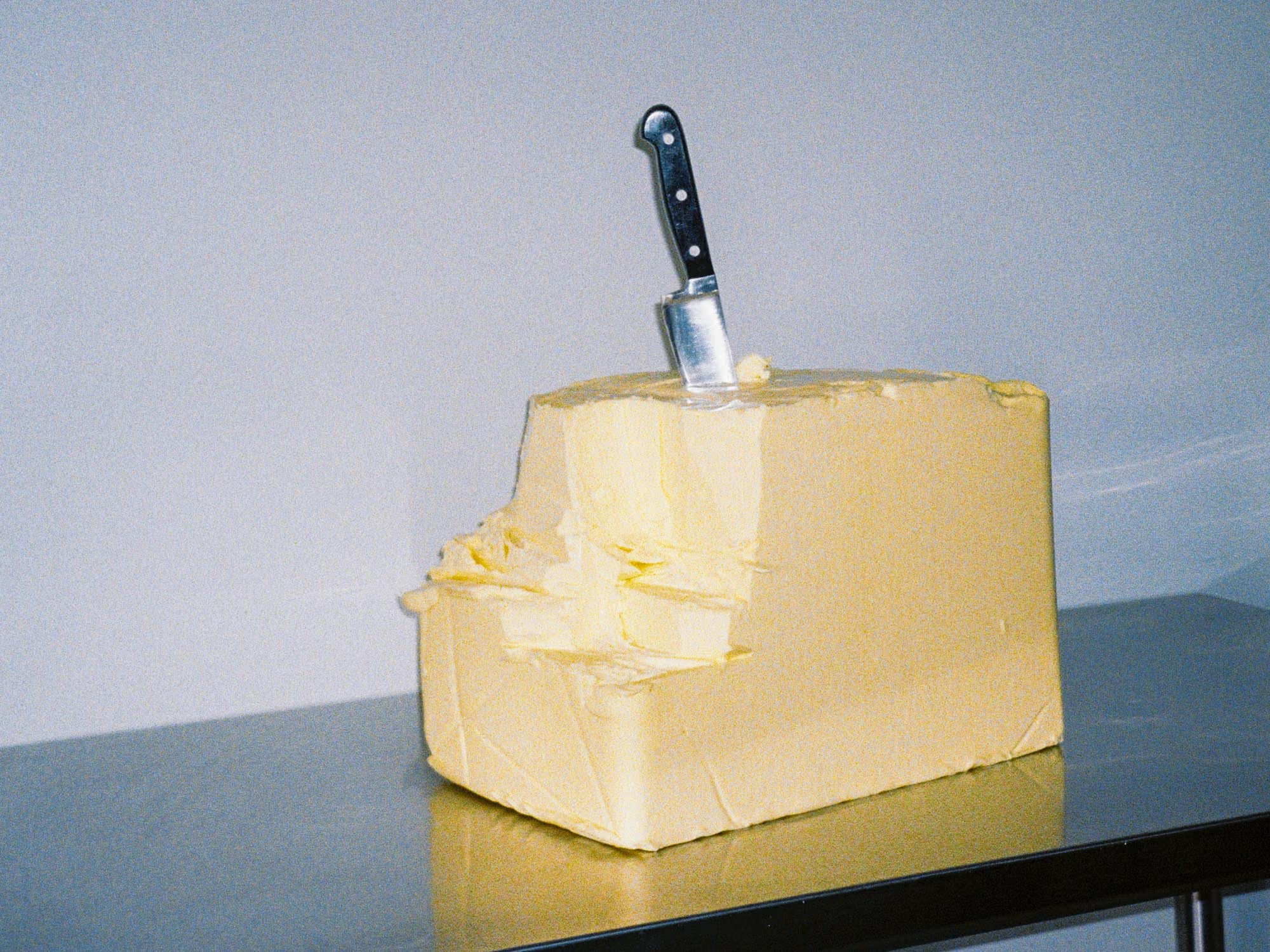
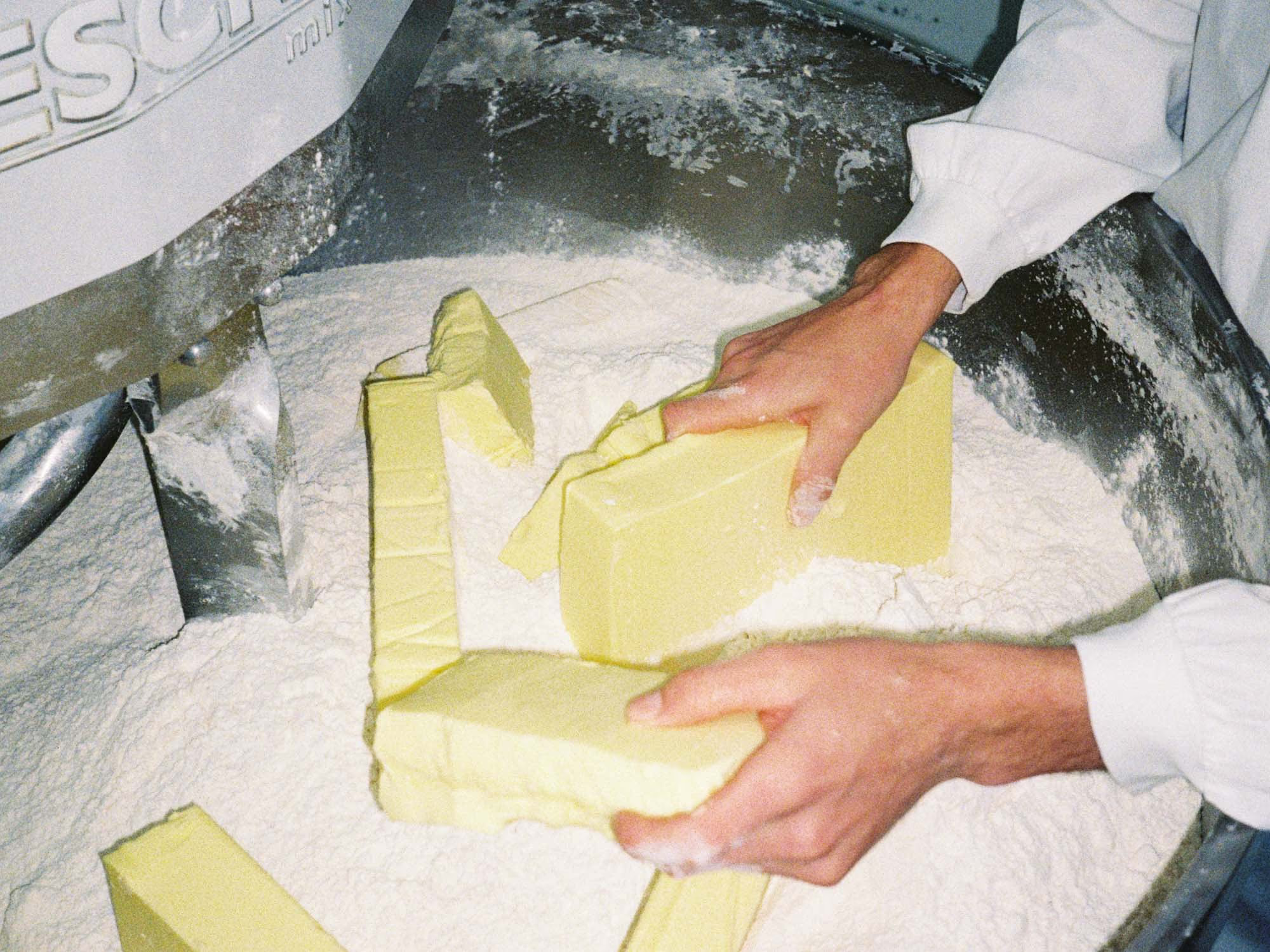
Our pastry has one fat in it, and it’s butter. No margarine, no palm oil, no blends. Butter is fussier and far less forgiving, so we temper it slowly over two days, in a room kept just for that, until it’s 10–12°C right through the block. Nothing else gives the same rich flavour, delicate flake and deep golden colour, and we don’t hold back on it.
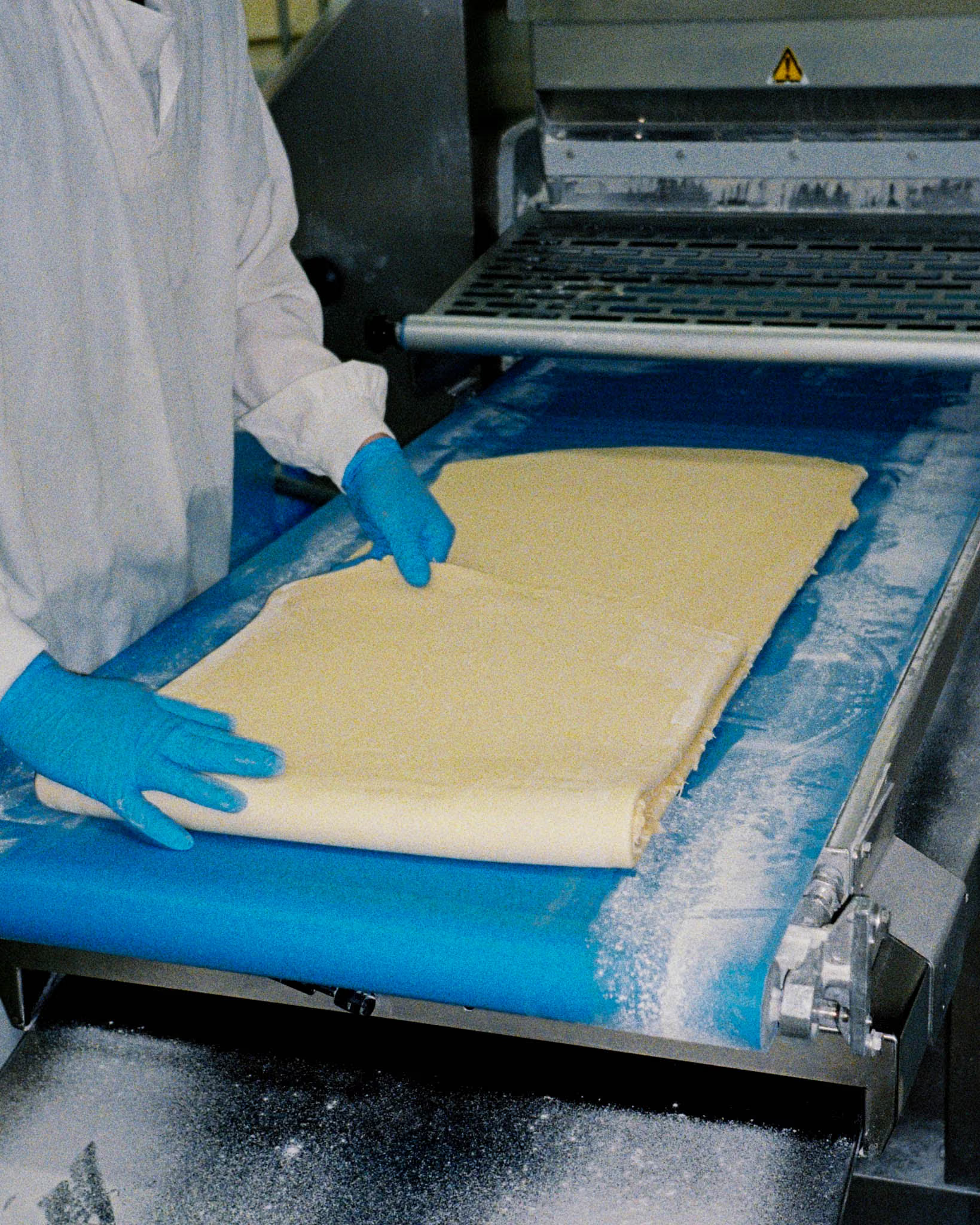
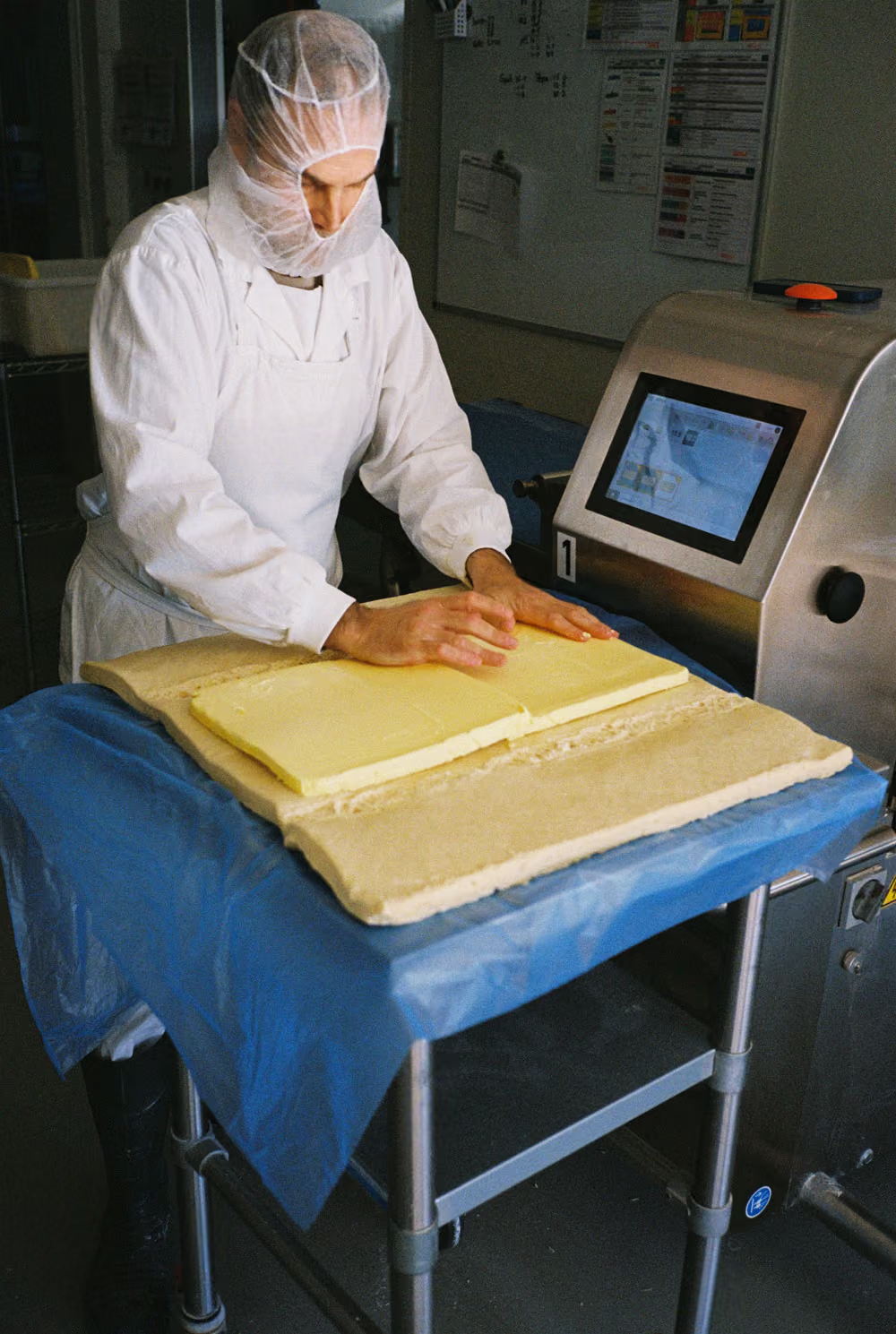
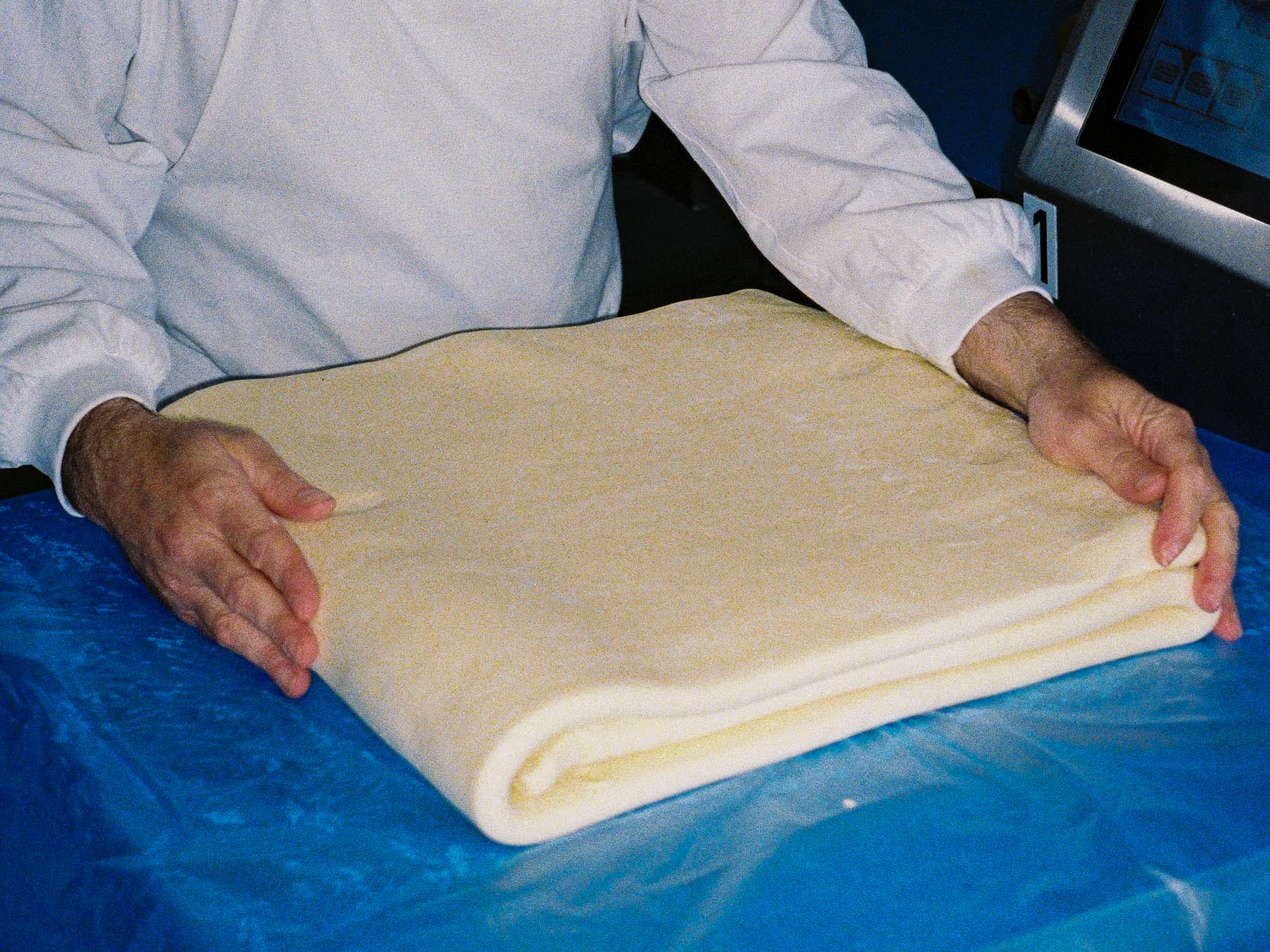
A block of butter, tempered until it’s pliable, is wrapped in dough, rolled out and folded. Then it’s rolled and folded again and again, resting in between, until our puff has 163 fine layers of butter and dough. This is lamination, and our pastry makers fold every batch by hand, keeping each fold square and neat. It takes two days, but it’s worth the wait. In a hot oven, the water in the butter and dough turns to steam and pushes the layers apart: high, crisp and golden.
That’s really all there is to it. Flour, butter, water and salt, with a little sour cream in one of our pastries. They’re the same things you keep in your own kitchen. There are no preservatives, no additives and no artificial colours, because we don’t need them. Freezing is how we keep it fresh, so the pastry you unroll at home is the pastry we made, just as we made it.
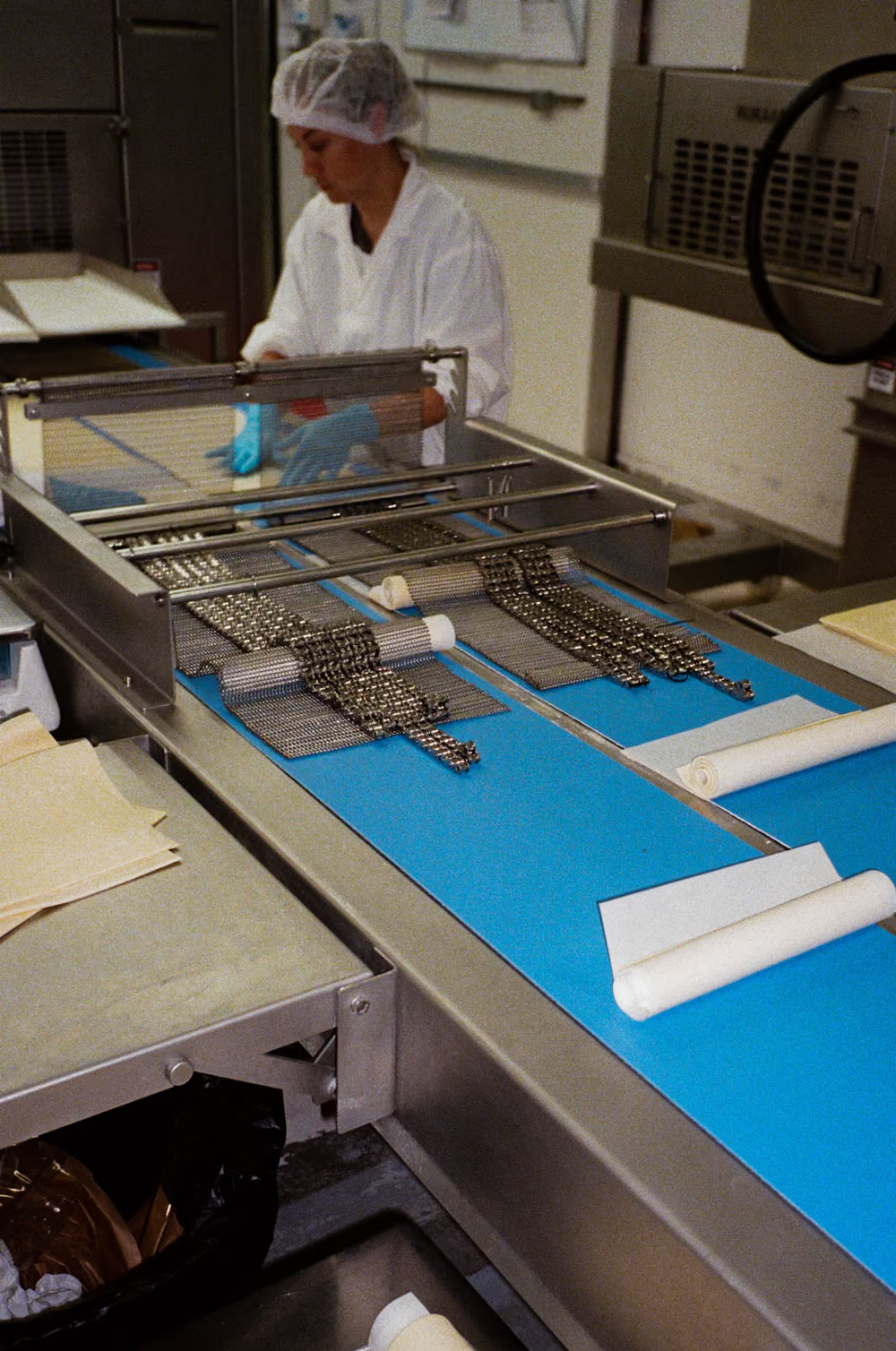
The Barossa Valley is known for food and wine made by people who care how it’s done, and that’s the company we keep. Our team has made Carême here since 2005. They fold, roll, pack and freeze every sheet, so the most useful thing in your freezer is ready whenever dinner needs it.